Visual Cohesion, Gameplay Extensions and Background Systems
Well — I said it was going to be infrequent. It’s been 10 months and here is the next update. I want to preface by saying that soon after making the first post I had to take a step back from the project almost entirely for roughly 3 - 4 months. So realistically this update is actually only about 6 months worth of work.
Visual Cohesion
Okay, so what have I been doing? Well roughly around the time of the first post I had committed myself to reining in all the visuals of the game. Up until that point I had been using a number of assets that I had sourced online for quickly conveying ideas of what I want. I need some walls quickly to block off an area, okay well I’ll just source some online, and then go back later and draw my own. That way I can actually get the gameplay working without spending a good amount of time drawing. But right after that first blog post, I committed to actually going back and drawing what I needed. This was in an effort to actually produce a cohesiveness between all the assets. Now I have to preface this again by saying that there are still some assets in the game I did not draw and will still be replaced. But there are also assets that I did not draw but will not replace, or have altered to more align with my art style.
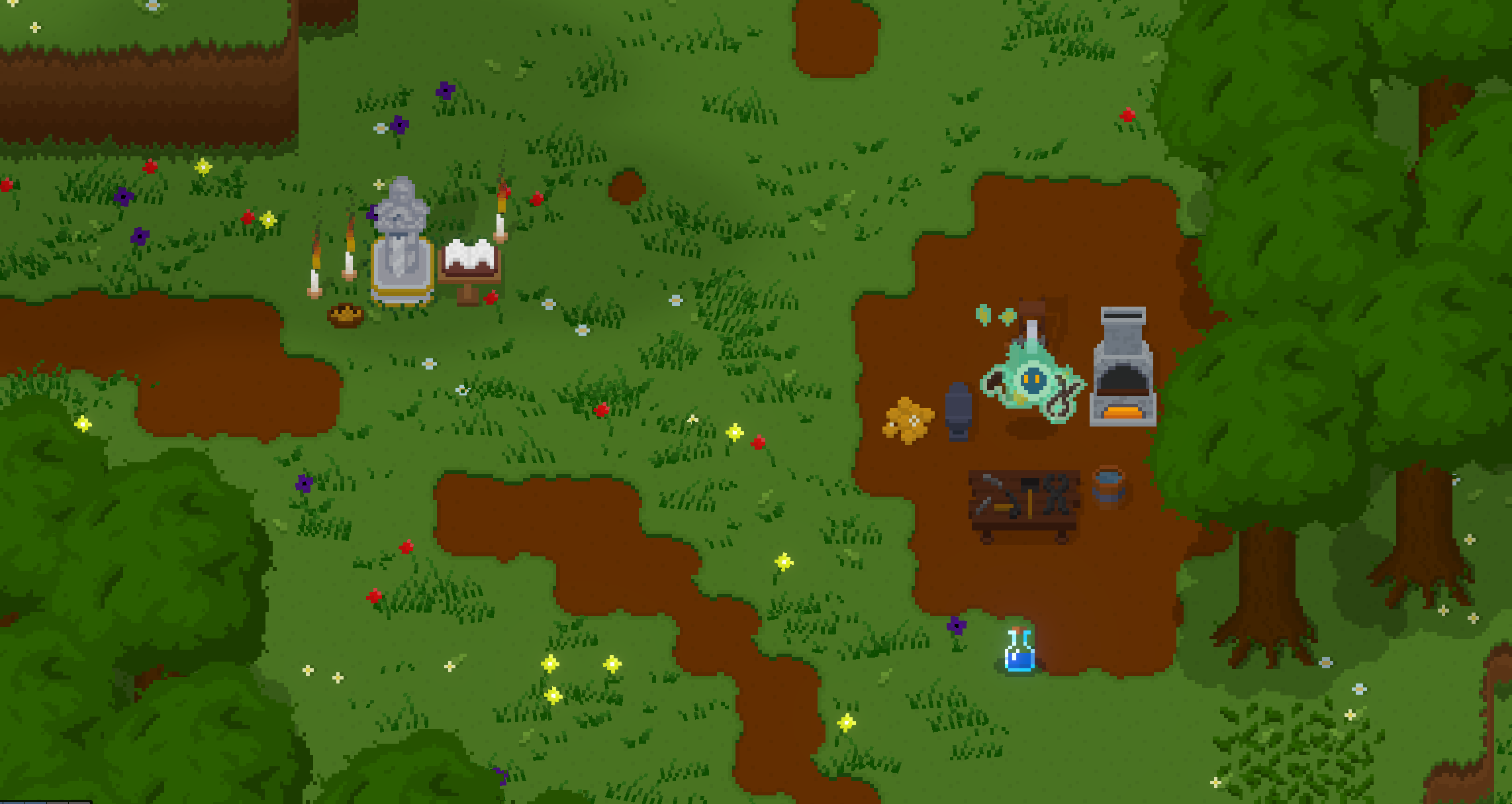
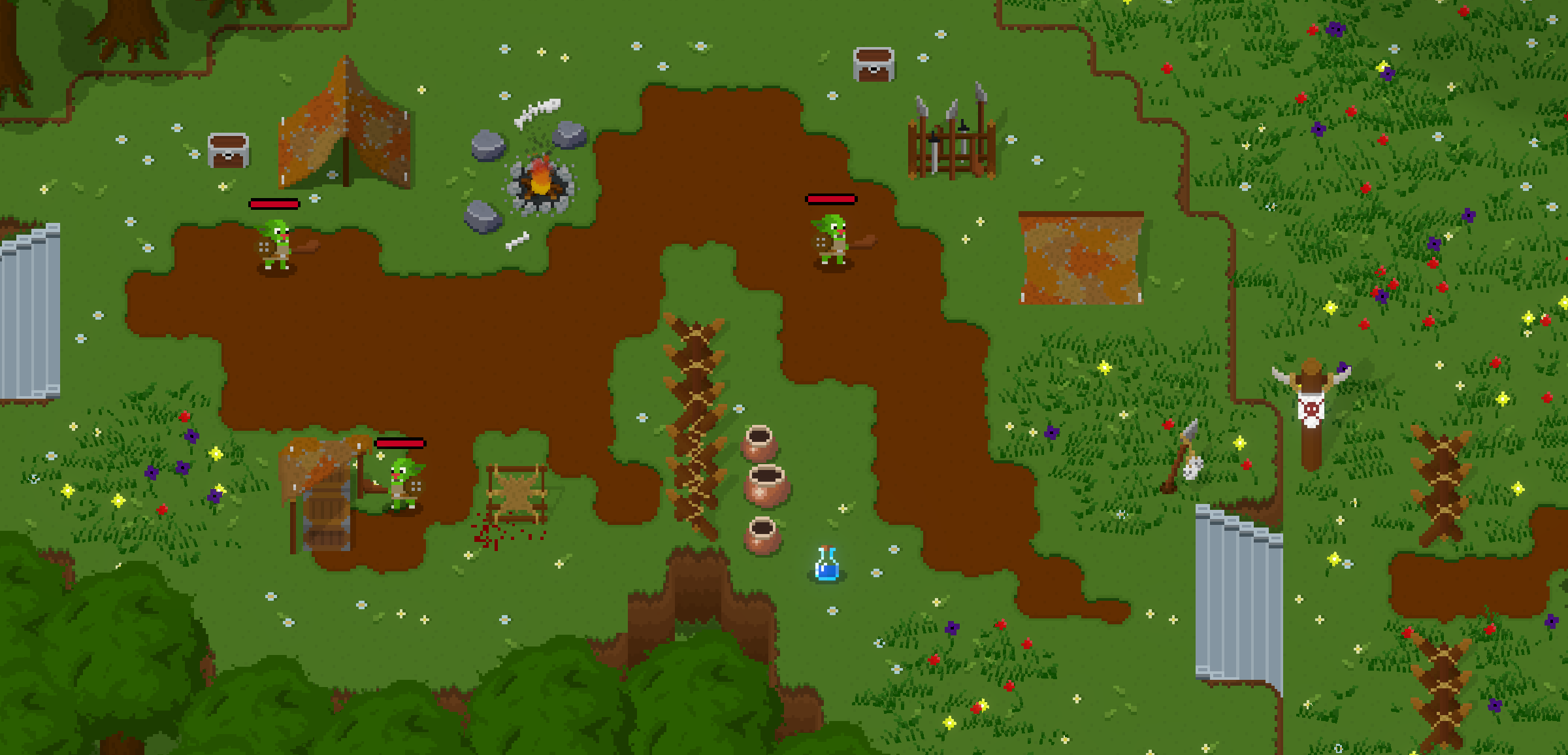
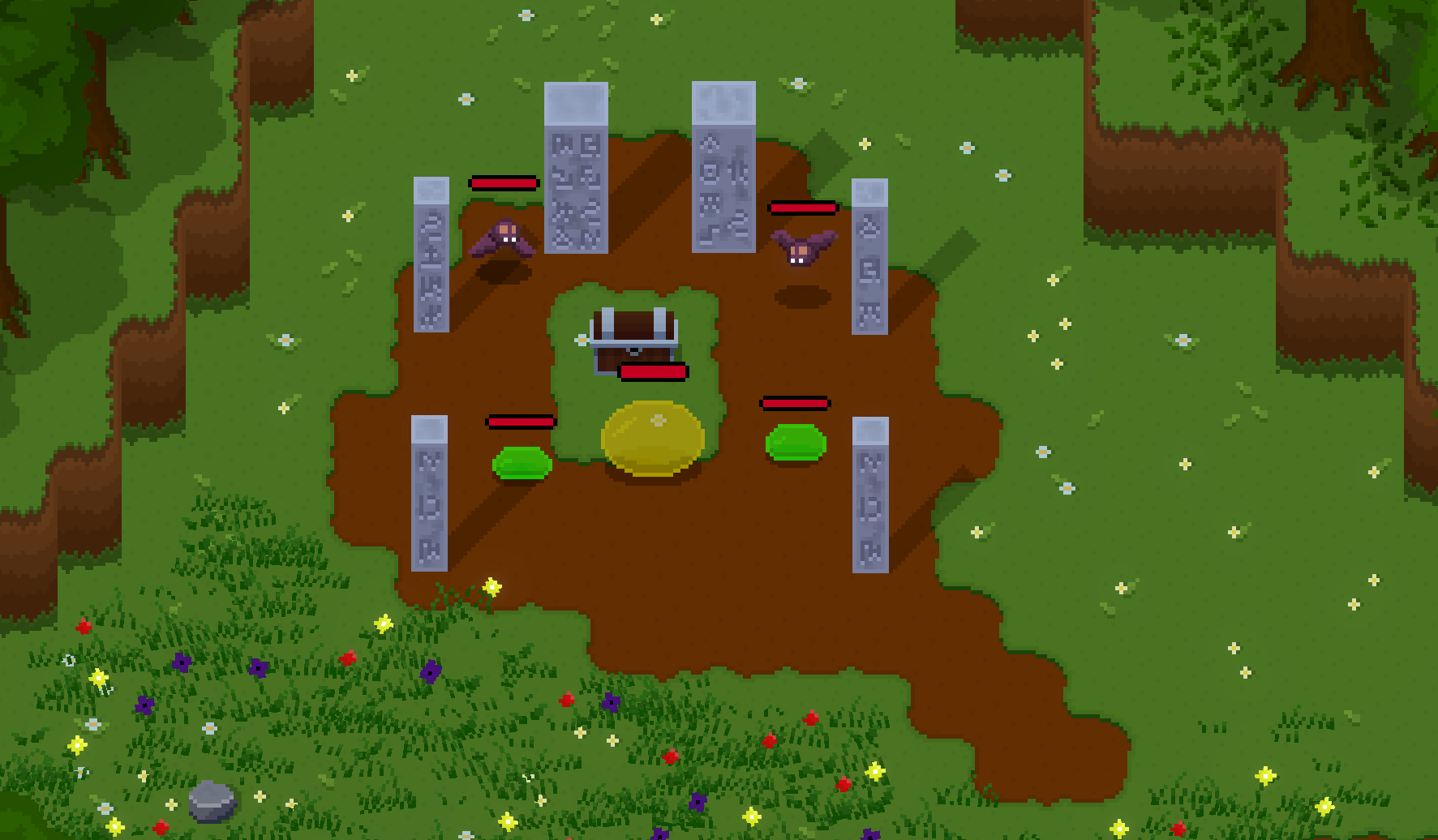
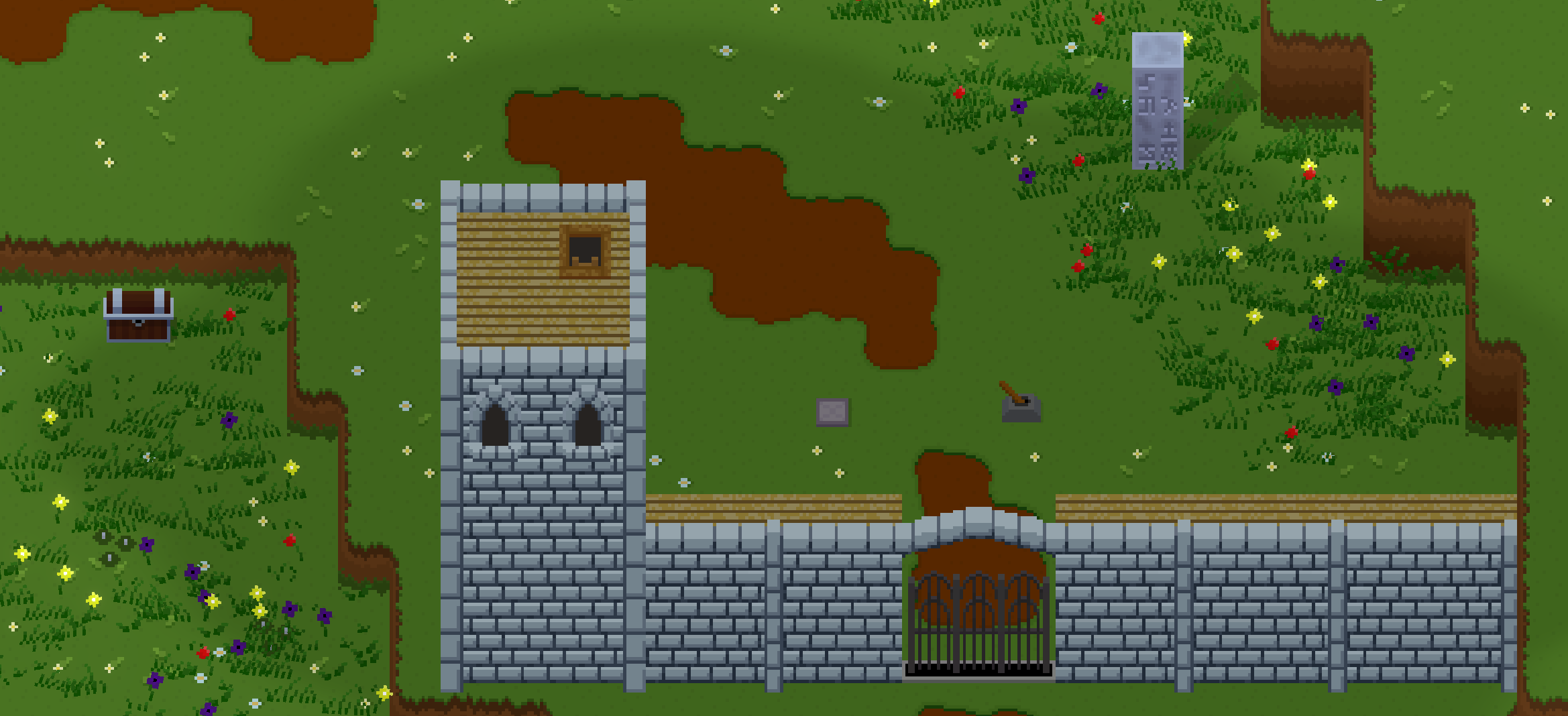
So lets get into the specifics of what the art style I’m going for is. As with every paragraph I must preface this with I am not an artist. I have not done much art in general. So I understand that the final products I create art wise is not particularly stellar. But, what I am mainly going for here, is to at least produce a final product that feels cohesive. So I think one of the largest aspects that I have deviated away from in comparison to most pixel art is outlines. I have opted to not use outlines. Now this comes with some downsides like readability. But also with that it creates a more unique look in comparison to outlined pixel art. Instead I’m trying to rely a little more on shading and color to produce shape. Another thing that I have done with the art style is not worry about pixel perfection when it comes to certain aspects, mainly to due with foliage. So the taller grass that sways isn’t pixel corrected, this does provide an easier implementation but also i think adds some smoothness to the motion. With this all said, the vast majority of artwork in this game will be pixel perfect, but I’m not too worried about it if I have to use non perfect pixels, if I think it adds something to the game. I’ve also opted for relatively flat texturing. Most assets I’ve created have little texturing. This is because well I’m not an artist but also because in part the main character has little texture and thus I wanted to continue that choice to all the other assets I create.
Gameplay Systems
I have made 3 separate levels. Now this game is going to be a series of small levels strung together. This provides a number of advantages technically. It allows me to for example use more computationally intensive algorithms for pathfinding and AI behavior. This allows for more accurate pathfinding as the graphs i can use can be more minute. And I can utilize more intensive conditional checks for enemy behavior if needed because a smaller level has less enemies inside it. So all in all, smaller levels allow me to produce the quality of behavior I want without the need to heavily consider performance (of course it is still considered though).
What is in these levels then? well for starters I see the 2 main functional aspects of the gameplay to be combat and puzzles. So most levels will boil down to some combination of those. I also like to add a little bit of exploration to the levels. So I will add areas of the map that are off the intended given path which provide some level of exploration effect. These paths often have their own combat or puzzle and reward, but they provide a little sense of agency to the player by giving them choices of whether to go down a path or not. Another small thing that I feel makes a large impact, especially in 2d games, is creating a sense of verticality via elevation changes. Which is why I created functional stairs that produce the illusion of walking up them by altering the players move speed, and movement angle when walking on them. This allows the player to move up or down hilled terrain and have it feel organic. I will also be creating a version that is just a ramp of the given terrain so when stairs don’t make sense for the environment I can use that.
In addition to all of this I have started working on another boss, which I have called the Slime Queen. This boss will be an optional mini boss in the forest biome area. She is still in production for most of her move set. But I do have one jump and slam attack for her that is done as a proof of concept for how I want her moves to feel. I wanted to make her feel very heavy in comparison to the other slime enemies.
Systemic Changes
I have made a number of systemic additions and improvements. The most recent of which is a saving system. So the game now tracks certain assets and systems and maintains their state. This involves a system that uses unique item keys for easy file lookup. When the game is saved or needs to be loaded, a event message is propagated down to all assets that care, and they handle loading/saving themselves. This also applies to various systems like player stats, inventory, and unlockables.
I’ve also done some work on what I’ve called my interact system. Which is just a way for environment assets to communicate. So I’ve added a tripwire, I’ve also altered how some assets function. For instance treasure chests can now be locked and require the player to open them via completing basic challenges, such as defeating a group of enemies or pushing a box onto a pressure plate.
I’ve also made some changes to my underlying systems that help with the overall game structure. Like a serializer, and improvements on systems like scene management. I’ve also started dabbling in things like scene templates for faster level construction.
Overall Thoughts
The progress over these last few months has been steady. I’ve worked on a number of things, some which I enjoyed and some of which needed to be completed. I think the work that I’ve done has more so engrained the vision for the structural aspects of the game, and made it clearer how this game actually links together, rather than it feeling like a bunch of disjointed parts that I have to manage separately. Those parts are now combined and it produces a level of fluidity that actually creates the experience of a game.
I want to note here as well that during these past months I also ran a sort of impromptu play test with a couple friends just to get an idea of what people thought about the game. This provided a good amount of insights into how players play the game, what players experience, and of course bugs. With that playtest feedback I was able to make a bunch of small scale improvements to a bunch of things that range from game feel, visibility, balance, and more. I won’t get into those changes here as they aren’t as flashy.
So what am I doing next time? well, the current plan is to produce some more levels and complete the slime boss move set. That way it will be possible to go from the start of the game, all the way to beating a boss. Just to see what that experience is like. I also plan to create a new reward system that piggybacks on the ability tree. This will likely be an ability upgrade system that utilizes dropped items from bosses, mini bosses, and maybe some puzzles throughout the game. This item will allow the player to upgrade certain abilities at the blacksmith. This hopefully will provide more incentive to complete bosses, and explore. But also to just generally provide a sense of progression to the player and their build.
Here’s to the next post not being 10 months from now.